Showing posts with label YA. Show all posts

Tuesday, May 27, 2008

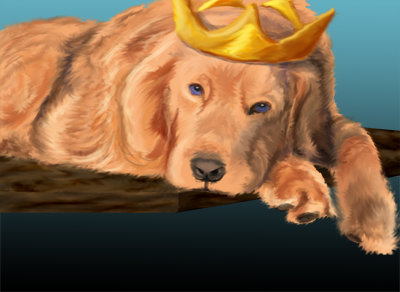
B-log: The Hero and the Crown

Every year, it seems, I find another author with whose corpus I feel the need to reaquaint myself. Last year it was Diana Wynne Jones, this year it is Robin McKinley.

The Hero and the Crown is her second book in the Damar series (however long that will be), though it is the prequel to The Blue Sword. I like this one just a bit better. Aerin is first sol (which roughly translates to Princess) of Damar and, unlike the rest of her family, seems entirely devoid of a magical gift. So she is searching for some way to prove herself and, due to a well aimed taunt and some interesting recipes, becomes a dragon slayer. Of course, that means the dragons start showing up in full force, the kingdom of Damar is under threat from the Northern Demons and Aerin is the only one who can do anything about it. After nearly getting herself killed, twice, Aerin fulfilled her role and finds out that her life is far more complicated and magical than she could have known.

As I've said before, McKinley's strength lies in her characters. Damar is one of the few places where she sets her stories that has its own history and existence and such; usually they're just in a kingdom somewhere. But Aerin is a marvelous heroine, with whom it is impossible not to identify. She is a twist on the usual princess, not just because she is an outcast, but because she is proactive. Women were never proactive in fantasy novels until McKinley and Tamora Pierce started writing. Aerin, in particular, is so lovable because her problems are real. I could actually sympathize with her position as first sol, which is a change from my usual scoff of "I wish I had your problems".

McKinley also does her readers the great service of making the romantic aspect of the story surprising. Having a painfully obvious romantic trajectory is acceptable for Jane Austen, but it is nice to see a bit of creativity in the more modern folk and McKinley provides just that. I thought I knew how the romance was going to turn out, but I was pleasantly surprised (especially as this was not the first time I had read this book. The first time in about seven years, though.) And the bittersweetness of Aerin's life is pretty much encapsulated in that.

I am, I'll admit, biased when reviewing my favorite authors. I've always been a littls suspicious of McKinley's heroines as the same sort keep popping up in vastly different stories. Still, they are excellent heroines and we could use more like them.

This is definitely my favorite of the two Damar books and it comes highly recommended, especially for any girl (such as myself) who spent her childhood searching for female leads who were not pathetic. As you might note, that search means that said female leads take up a disproportionate numer of entries in this blog.

Monday, May 26, 2008

B-log: Angel Isle

So yesterday was spent at a movie marathon and, as such, left me no time to blog. So we'll let the laxness slide and pretend it never happened. Right, anyway, the most recent book I've finished is Angel Isle, by Peter Dickinson. It is a sequel of sorts to The Ropemaker, in the sense that it is the continuation of that story, if not the lives of those characters.

I picked up Dickinson because he married Robin McKinley, which I thought said a lot about the man. One of these days, I will devote a full post to McKinley and explain my love for her work, my grudging respect bordering on annoyance with her personality and my adoration of her dogs. For those in need of more details, her blog. Somewhere on there is the story of how they met, which I really enjoyed reading. So it made sense, as far as I was concerned, to read Dickinson's work because his wife wrote well. I do like being right about things.

Maja and Saranja come from a family in charge of "Singing to the Unicorns" who protect the Southern border of their valley, while Ribek speaks to water and, through his gift, protects the Northern border. For two hundred generations (ever since the events chronicled in The Ropemaker) these protections have stood strong. But the magic's time is up and now they have set forth, some rather reluctantly, to find the Ropemaker and ask him to renew the spell. The Empire into which they venture is a dangerous place, ruled by Watchers who zealously guard all magic and who are displeased, to say the least, when they catch anyone using it. Which means that, naturally, our heroes team up with a mage, Benayu, and his inter-dimensional lizard, Jex. To complicate matters, Maja discovers that she has a special sense for magic and, when too much of it is used around her, she blacks out. Between the five of them, they need to reach the Ropemaker without bringing destruction down on themselves and hope that he has the power to do something before the Watchers drag the world down into total chaos.

Dickinson, first of all, is a delightful author. Despite writing for children, he never talks down to his readers, nor does he ever do them the disservice of assuming they are too young for complex material. Like L'Engel, he merely searches for a way to present it so that his audience can understand his topic of choice. Angel Isle is a rare find, for it combines fantasy and science fiction in a way I have never run into before. Dickinson creates a typical fantasy world, but instead of throwing up his hands and saying "It's magic, suspend your disbelief", he takes the lawful relationships and equations that we use to understand our universe and applies it to his. I was eagerly awaiting his description of a Universe different than our own and he did not disappoint me.

Having finished the book, I'm still not entirely sure who the main character was. I think it was Maja, who certainly got the plurality of the spotlight and who grew the most, but I found myself equally drawn to everyone in the book...which is to say not very much. I enjoyed reading about them and the book kept me hooked from the first word to the last, but I never really identified with the characters. I felt as though I was exploring someone else's world and following along as they told me about it, but the adventure was never really mine. Still, that might just be a testament to Dickinson's ability to create very real characters, who are so well defined on their own that they don't need my input. Either way, I was more than happy to hear about what happens to them, even though they has to share the spotlight.

Dickinson's world building abilities are truly stunning - his Empire and the universe it inhabits is incredibly well delineated even for a young adult book (and certainly for an adult novel) and he manages to capture the long journey taken by the characters without adding in the tedium they, no doubt, felt. I have no problem with the characters feeling the effects of a long journey, but reading a book should not replicate the experience (which is one of several reasons why I no longer read Goodkind or Jordan). Dickinson strikes the right balance between realism and entertaining the reader and if they ate liver-kebab a few more times than I thought necessary...well, there are worse sins.

As noted earlier, this book is a wonderful specimen of genre-defying fantasy, both in its insertion of "real" science and in its ability to suprise me with the ending. Having slowly read my way through an appreciable amount of YA fantasy, I tend to assume that a certain number of events are possible as methods of resolution and so it's always nice to see an unexpected one handled well. Despite five hundred pages, Angel Isle never dragged, and my only regret, at the end, was that it did not continue. One can always hope for another sequel.

Wednesday, May 21, 2008

B-log: Outlaws of Sherwood

So, this morning (to use the term lightly), I finished reading The Outlaws of Sherwood by Robin McKinley. It is a retelling of the famous story of Robin Hood and his Merry Men, done with the fairly unusual premise of making the story plausible.

Now, leaving aside my opinion of her temperament, she is a great YA author. Her prose flows beautifully and has a stark, unembellished quality to it that I have always admired; perfect for that age when one can appreciate good writing, but cannot yet get through some of the more, erhem, prosaic authors. Her characterization is very nice and her portrayal of Robin Hood as the reluctant hero is as well done as it is different.

McKinley's main strengths, in all her books, are her characters. She's a very people-oriented author (as opposed to...Tolkien, for example) and all of her books tend to sacrifice world-building for characterization. There are worse faults, however, and The Outlaws of Sherwood is certainly one of her most realized worlds, presumably because it is set in Richard the Lionheart's England.

My personal favorite character is Little John, who tends to get short shrift in the other stories. He gets much more "screentime" in this version and, while I don't want to spoil anything, his happy ending is my favorite part of the book (I'm hopeless that way).

The book was a little slow at some point, generally while McKinley is trying to make it clear that outlawing is not all fun and games--there is rain and mud and tree roots stabbing one in the back, but I could not help but wish she would get on with it. After all, we were waiting for Robin to start robbing the rich to feed the poor.

In some ways, however, that is also the books strength. The hero is a perfectly normal person who chooses to do something extraordinary with his circumstances. We love Robin, not because he's a superhero, but because he is an ordinary man trying to fill a hero's shoes. We sympathize with his indifferent archery skills (which are a lovely touch by McKinley) and we're as torn as he is when trying to balance the safety of his men and the need to protect the people outside Sherwood. McKinley's characters pull at you and, before you know it, you're just as interested in their fates as they are. That is her gift as a writer, to bring legends to life and make the heroes of tales into real people.

My one complaint is the ending, which feels like McKinley has written herself into a corner. She has been trying to create a realistic Robin Hood, but is then caught between what the obvious punishment would be for such a man and what the tales say is his reward. Her compromise is, perhaps, the best that could be done, but it still feels...contrived. Which is true about the fate of all folk heroes. But it is incongruous, when she has done such a fabulous job in bringing the rest of the legend to life.

At any rate, it is well worth the read and yet another example of my personal pet peeve - all the good literature now being written is Young Adult